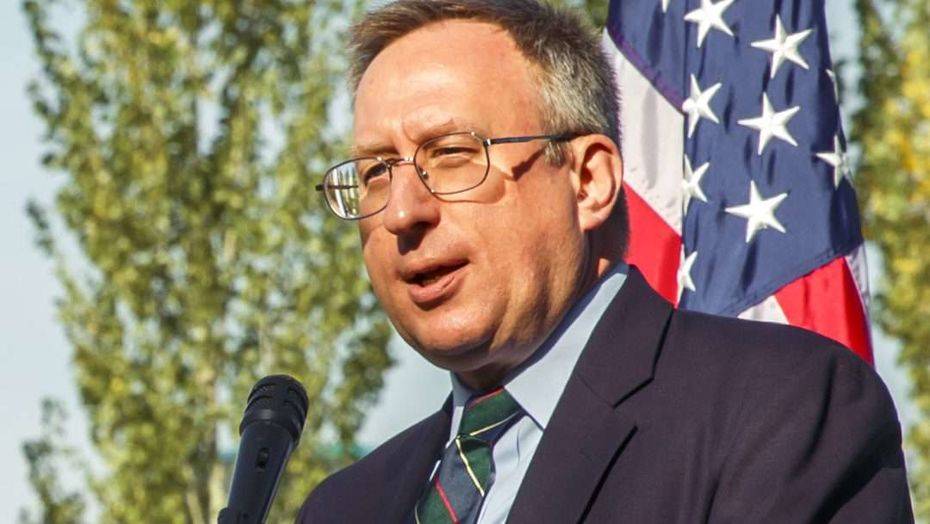
Interview with Peter Maurer on International Humanitarian Assistance

Peter Maurer serves as the president of the International Committee of the Red Cross (ICRC). Born in Thun, Switzerland, he received his doctorate in history and international law in Bern. He subsequently worked in the Swiss diplomatic service, becoming ambassador and permanent representative of Switzerland to the United Nations in New York in 2004. In 2010, he was appointed Secretary of State for foreign affairs in Bern, in which he oversaw Swiss diplomatic missions around the world. In July 2012, he assumed the leadership of the ICRC. During his tenure, the ICRC has carried out humanitarian work in over 80 countries and has seen a historic budget increase, from 1.1 billion Swiss francs in 2011 to over 1.8 billion Swiss francs in 2016. Amelia Goldberg sat down with Maurer to discuss the unique mandate of the ICRC, the particular challenges facing this organization, and the current status of international humanitarian aid. Originally published in Winter 2017.
You have been the president of the International Committee of the Red Cross (ICRC) for over four years now. What have been some of the greatest challenges of this position?
The big challenges are the ones in relation to the conflict environment, which is at the core of our mandate. The core of our mandate is to mitigate the impact of war and violence on people and to assist and protect those affected. I have been president of the ICRC at a time when we have seen an unparalleled surge in conflict and violence — from West Africa to Afghanistan, from Ukraine to Myanmar, and across Central America — with unparalleled population displacement as a consequence. Because of the size, impact, nature, and complexity of those many conflicts, a gap has emerged between the need of the people to sustain their lives and livelihoods on the one hand, and the ability of the international humanitarian system to deliver on the other.
The second challenge is to engage with belligerents to make them respect humanitarian laws and principles in such a violent conflict environment. We are not only a relief organization; we are an organization with a mandate in law, policy, diplomacy, and operations. The belligerents we engage with have become increasingly fragmented, and have become more diverse in nature. We have also seen a growing presence of non-state actors in conflicts. This has made it more complex to obtain respect for international humanitarian law because there are simply more actors and more interfaces to engage and negotiate with.
Finally, the third challenge is that as the president of ICRC, I also have a role of advocating with states that have signed the Geneva Conventions. There are 194 signatories to the Geneva Conventions, and I must impress upon them the importance of humanitarian concerns, and draw their attention to the fact that a lack of political solutions and lack of respect for the law is leading to enormous costs for people affected and for the international community as a whole.
These are the three key levels of challenges: operational on the ground, legal in terms of application of the law, and political in terms of engagement of states to sensitize them to the impact of war and violence and the need for political solutions.
When the ICRC is negotiating with belligerents on many sides of a conflict, how do you manage these interactions, and how do you retain impartiality in such circumstances?
The negotiations with belligerents are, of course, a big challenge. In many conflict arenas, the ICRC works in experimental mode. We have to figure out who the reliable interlocutors in control of territory and populations are, and with whom we have to talk in order to open humanitarian spaces. You can’t determine this on the basis of a telephone book or Google search, because they are not listed. Rather, it is the encounters with belligerents that very often allow us to build relationships with the respective authorities and other groups on the ground with whom we may negotiate. It’s really a bottom-up methodology. Of course, in many cases, you know who the groups are and where they have offices and contacts. But in many instances, frontline negotiation happens by experiment and by the fact that afterward, humanitarian intervention can be delivered. When we encounter a reliable partner, we build a relationship, and this partner may be reliable again the next time.
This is one of the reasons why the ICRC is much more efficient and effective over time. Sometimes the ICRC has a hard time at the beginning with reading the landscape of the conflict. Over time, however, we meet people, we get a handle on the conflict, we are transparent in what we are doing, and what we are doing is appreciated by the population wherever we are. This normally gives us a level of confidence and comfort that allows us to repeat and expand the humanitarian operation.
The perception of impartiality comes from a consistent focus on needs, and a credible prioritization not along the lines of any political, ethnic, or religious preference. We demonstrate that what we are doing is setting priorities based on the level of need. This is not always an objective guideline, but I think that transparent and needs-based operations help us, over time, gain the confidence of the belligerents.
Some commentators have voiced concerns that in Syria, humanitarian aid is freeing up resources — for Assad’s government or for the various rebel groups — to spend on military deployment. Are you concerned that the provision of aid is ultimately prolonging the conflict?
The argument that humanitarian aid prolongs conflict is as old as humanitarian aid itself. It has been part of a big debate over the decades and centuries. If you read what Florence Nightingale wrote to Henry Dunant, the founder of the ICRC, in the 19th century, what we can see is exactly this allegation — that the creation of the ICRC would help prolong conflicts. We know the argument. The counterargument is that, given that conflicts are taking place and have an unacceptable toll on human life, it is crucial to mitigate the effects of the conflict. I think that over the decades and centuries, we have found ways of ensuring that humanitarian aid is clearly directed to needs and is not basically a substitution for belligerents.
To be very frank, the argument with regard to the present situation in Syria is a rather obnoxious one. Belligerents get their weapons to wage war because they are supplied by important states, not because their resources are freed up by humanitarian activities, which they don’t deliver anyway. So it’s just turning the logic upside down, and I really have quite little sympathy for this argument. There is no question that the Syrian population and many other people worldwide are suffering and need assistance and protection, and that belligerents in Syria get weapons and support independently of the work of humanitarian organizations.
The ICRC is a frontline aid organization, and often one of the most vulnerable and exposed. What particular challenges does it create to be a frontline organization, and how do you address them?
At the frontline, the biggest challenge is always to negotiate the modalities under which you can carve out a humanitarian space. The humanitarian space should be one in which there is security for civilians, including for humanitarian workers. In this humanitarian space that we negotiate — and this is the specific work, of course, of such a frontline aid organization — we are constantly confronted with important dilemmas. On the one hand, the ICRC is committed to laws and principles that are not to be negotiated; on the other hand, we all know that we have to negotiate practical arrangements in order to create this humanitarian space. There is a tension between principles and pragmatism, and between being an advocate for the victims and entertaining good relations with the belligerents in order to ultimately be better able to support the victims. You can’t reconcile these issues easily. There is always a tension between advocacy against violations of international humanitarian law and the unacceptable level of violence that the ICRC is witness to, and the need for confidentiality. You want to maintain a space in which belligerents can change their behavior for the better, without being accused by a humanitarian agency advocating for accountability. So there are important and recurring tensions that have led us, in a systematic way, to collect our experiences and improve our negotiating skills at the frontlines.
Additionally, regarding the safety of humanitarian workers, we have a very specific philosophy at the ICRC, which is that we don’t protect our missions through weapons or weaponized security arrangements. Instead, we work through transparent information and negotiation with all the belligerents. This has traditionally helped us to have a reasonably good track record, but of course it needs an enormous investment into dialogue explaining what we are doing with parties on all sides of the frontlines. And of course this is more complicated because “frontline” is, at this point, really a euphemistic term. We don’t actually have frontlines anymore because battlefields are increasingly protracted, as are conflicts.
Do you think this tension between principles and pragmatism has increased in recent years?
That is difficult to assess because we don’t have serious analysis to prove exactly what it was before. If we look at experience within the organization, I can say that most of these dilemmas have been with us for decades. Nothing is fundamentally new in terms of the dilemma. What has changed, though, is the conflict environment in which this dilemma unfolds. For instance, some of the problems become more acute when the frontline is urban, and so the fragility of infrastructure is more important than in an open battlefield. As a result, the civilians and military personnel, buildings, and infrastructure are more difficult to keep apart from each other. So the context has changed, but the basic dilemma has remained the same for many decades. We have interesting examples from colleagues who negotiated in the 1960s, ‘70s, and ‘80s, which today are still interesting models and lessons for negotiating and choosing tradeoffs. Let’s not forget that the world has seen genocides, world wars, and cruelties before. It’s not the first time that we are witnessing this, and I think that we can learn from some of these experiences in the past to determine what is an acceptable compromise on a frontline and what would be a problematic one.
For instance, one of the big dilemmas relates to the role of a humanitarian organization in the evacuation of civilians from a besieged area. The ICRC at certain moments in Syria and Iraq did not wish to participate in an evacuation process as long as there were no guarantees that we could have access and follow-up with the people who were evacuated. You want to ensure that the principles of humane detention will be followed, and if you can’t follow up, you may not wish to be part of an evacuation scheme. But if you are not part of an evacuation scheme, this may put those who are evacuated into an even harsher situation. It is an important dilemma again: what are the conditions under which we are ready and able to participate, to follow up, and to assist and protect those who are evacuated from besieged areas?
International humanitarian law prohibits the targeting of hospitals and other shelters, but hospitals have been frequently bombed, particularly in Syria. How do you respond to these obvious violations of international humanitarian law?
First and foremost, one of the research activities of the ICRC over the last couple of years has indeed shown that attacks on hospitals, medical workers, and ambulances are much more frequent than we thought. We have ample evidence that in many conflicts today, far beyond Syria, the medical facilities, instead of being particularly protected, are increasingly being attacked. This is an unacceptable violation of international humanitarian law. The ICRC has tried to mobilize the international community on this issue, and one of the results of this mobilization process has been that the UN Security Council has made an important decision with Resolution 2286 condemning attacks on healthcare in conflict. Other international institutions have also put this issue on the agenda and encourage states to stop this practice wherever they have influence. Also, we have gathered the professional community worldwide and partnered with medical professional organizations, surgeons, hospital directors, [and] associations of nurses and doctors worldwide, in order to help them cope with these problems. We work to train them, to sensitize them, and to teach them what kind of behavior will eventually attract attacks on hospitals and how they can ensure that they are neutral and perceived to be neutral. So there is work to do on changing the behavior of belligerents, which is traditional work of the ICRC, and at the same time there is work to sensitize the medical institutions. In the conflicts of the past decade, we have seen increasingly that belligerents have occupied hospitals and imposed preferential treatment for their soldiers. Civilians suffer from this, first because they are kicked out of the hospitals by belligerents, and second because those who remain are at risk of being bombed by the other side. This is a very problematic development that we have tried to bring to the attention of the international community, and which has trickled down to this resolution of the Security Council.
How do you assess the status of international humanitarian law today, and do you see any hope for reducing violations or holding violators accountable?
First, if you look at the normative framework of international humanitarian law, it has never been as developed and sophisticated as it is today. It’s a legal framework that has considerably evolved over the last decades and is a now a strong normative system with strong political support. Rarely would a belligerent dare say that they are against international humanitarian law and principles. The problem is getting them to respect international humanitarian law; and here, of course, different methodologies are necessary. The ICRC does not have a mandate to ensure accountability for international humanitarian law violations. States and other parts of the international community have this mandate, like the Security Council and the International Criminal Court. The ICRC works bottom-up with the methodology of creating a minimum space for humanitarian action and by generating trust among belligerents, which is a precondition to end violations. Both approaches are certainly legitimate approaches, but I think it is important to distinguish between the two. Ours is a mandate of creating humanitarian spaces, building trust, and changing behaviors of belligerents to make them apply international humanitarian law, while other actors in the international community have accountability mandates.
Are these approaches complementary? Does it help you, when working with belligerents, to point to the possibility that they will be held accountable for continuing violations?
Belligerents know that they will be held accountable; we don’t even need to remind them. We know that accountability processes help, and the ICRC has always maintained that the creation of national and international accountability systems is something that we welcome. This is foreseen in the Geneva Conventions, where states are asked to hold those who violate the provisions of the conventions accountable within their respective legal systems. Accountability is something that is included in the Geneva Conventions as a positive element for the respect for international humanitarian law. However, it is not the ICRC that has the first mandate to ensure this accountability. The first responsibility lies with states.
Keep reading
More stories →